

MOPE Clinic Issues Testosterone Blood Testing Checklist for South Louisiana Adults
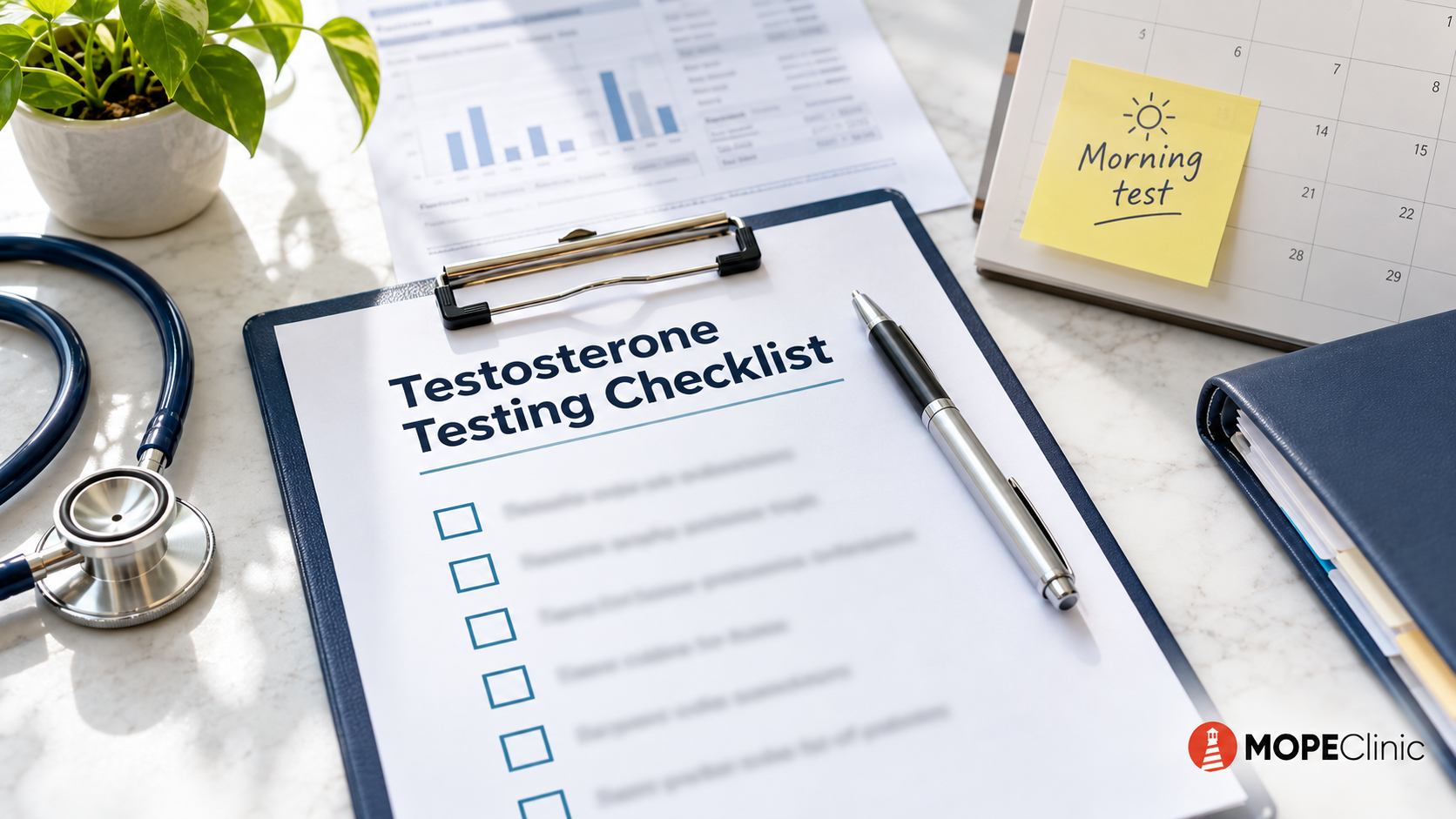
MOPE Clinic in Metairie, Louisiana, shares educational guidance on testosterone blood testing, morning testing, repeat measurements, and understanding hormone results.
Metairie clinic explains testosterone testing, hormone results, repeat measurements, and practical tips for patients across South Louisiana.
METAIRIE, LA, UNITED STATES, October 19, 2026 /EINPresswire.com/ -- # MOPE Clinic Issues Testosterone Blood Testing Checklist for South Louisiana Adults
**Metairie healthcare practice provides expanded patient education on testosterone testing, laboratory reference ranges, repeat measurements, and questions to discuss with a clinician.**
MOPE Clinic, an appointment-only concierge healthcare practice in Metairie, Louisiana, is issuing an educational testosterone blood testing checklist to help adults better understand laboratory preparation, common hormone measurements, and the importance of appropriate medical evaluation. The educational initiative is intended for adults throughout Greater New Orleans and South Louisiana who have questions about testosterone testing or previously received results they do not fully understand.
The announcement follows a July 16, 2026, statement from the Endocrine Society emphasizing accurate diagnosis, reliable laboratory testing, and appropriate clinical evaluation before decisions about testosterone treatment.
Testosterone plays an important role in reproductive health, sexual function, muscle and bone maintenance, and other physiological processes. However, accurately identifying testosterone deficiency involves more than comparing one laboratory value against a reference range. According to Endocrine Society clinical guidance, testosterone deficiency should be diagnosed only when compatible symptoms and consistently low hormone measurements are present. Appropriate testing methods and evaluation of possible underlying causes are also important.
## Why the Time of Day Matters
Testosterone levels fluctuate throughout the day. In many adult men, especially younger individuals, levels tend to be higher earlier in the morning and lower later in the day. Consequently, an afternoon blood sample may produce a different result from a properly collected morning sample.
The Endocrine Society recommends fasting morning total testosterone measurements when evaluating suspected testosterone deficiency. Separate repeat testing is also recommended to confirm a low result. Sleep schedules can complicate testing, so individuals who work overnight shifts or regularly sleep during the day may need individualized instructions about the most appropriate collection time.
Acute illness can also temporarily affect hormone measurements. Testing during an illness may not accurately reflect a person's usual hormonal status. These factors demonstrate why sample timing, recent health changes, and accurate documentation can be important when interpreting results.
## Understanding Total Testosterone, Free Testosterone, and SHBG
A routine testosterone evaluation generally begins with total testosterone, which measures both protein-bound and unbound testosterone circulating in the bloodstream. Free testosterone refers to the portion that is not bound to proteins. Although it represents a smaller fraction of circulating testosterone, it may provide useful information in certain clinical situations.
Sex hormone-binding globulin, or SHBG, is a protein that binds testosterone and other sex hormones. Changes in SHBG can alter the relationship between total and free testosterone measurements. For example, obesity, thyroid disorders, liver conditions, aging, and certain medications may influence SHBG concentrations.
A total testosterone result that appears borderline may therefore require further evaluation in selected circumstances. Professional guidelines recommend reliable free-testosterone measurements or validated calculations when total testosterone is near the lower limit or when SHBG abnormalities are suspected.
Not every patient needs every hormone measurement. Additional testing depends on the individual's medical history, symptoms, and initial laboratory findings.
## What Is Considered a Low Testosterone Level?
The American Urological Association identifies total testosterone below 300 nanograms per deciliter as a reasonable threshold that may support a diagnosis. However, the numerical value alone does not establish testosterone deficiency. The association recommends two separate early-morning total testosterone measurements, along with compatible symptoms or clinical signs.
Laboratory reference ranges may also differ because of testing methods, calibration, and the populations used to establish normal values. A result slightly below a particular laboratory cutoff does not automatically establish the underlying cause. Similarly, symptoms that resemble testosterone deficiency do not necessarily mean that testosterone levels are abnormal.
The clinical objective is to determine whether a consistently low hormone measurement is present and whether it is medically relevant.
## Why Fatigue and Other Symptoms Need Careful Evaluation
Reduced sexual desire, fewer spontaneous erections, and certain changes in physical well-being can occur with testosterone deficiency. However, fatigue, reduced motivation, sleep problems, and changes in exercise performance are not specific to low testosterone.
Other contributors may include sleep apnea, thyroid disorders, medication effects, depression, chronic medical conditions, or insufficient sleep. Obesity may also be associated with reduced testosterone concentrations, and some low readings may improve when a reversible underlying factor is addressed.
The Endocrine Society's July 2026 statement specifically emphasizes identifying reversible causes and avoiding treatment decisions based solely on symptoms or one laboratory measurement.
## Practical Checklist: Preparing for a Testosterone Blood Test
The following educational steps can help patients arrive at a medical evaluation with more complete information.
**1. Confirm the laboratory appointment time.** Patients can ask the ordering clinician when the sample should be collected. Morning collection is generally recommended for suspected testosterone deficiency, but special schedules may require individualized planning.
**2. Ask whether fasting is necessary.** Patients should follow the clinician's fasting instructions and clarify how these instructions apply to diabetes, medication schedules, or other medical conditions. Prescribed medication should not be stopped without medical direction.
**3. Gather previous laboratory reports.** Earlier testosterone results can provide valuable context. Reports should include collection dates, collection times, measurement units, laboratory reference ranges, and the testing laboratory when available.
**4. Prepare an accurate medication list.** Prescription medications, nonprescription drugs, supplements, and hormone-related substances should be disclosed to the clinician. Some can affect testosterone measurements or influence the interpretation of symptoms.
**5. Document recent illnesses and health changes.** Recent hospitalization, acute illness, major sleep disruption, or a substantial change in general health may affect the interpretation of laboratory findings.
**6. Record symptoms without attempting self-diagnosis.** Patients can document when symptoms began, whether they fluctuate, and whether they interfere with daily activities. A written symptom history may support a more productive clinical discussion.
**7. Mention fertility plans.** Future fertility is especially important when discussing possible testosterone treatment because externally administered testosterone can suppress sperm production.
**8. Ask how results will be reviewed.** Patients can clarify whether results will be discussed during an appointment, whether repeat testing may be necessary, and which additional measurements could be considered.
## Common Mistakes When Reviewing Testosterone Results
One common mistake is treating a laboratory's normal range as a complete explanation of hormone health. Reference ranges are useful, but clinical interpretation also considers symptoms, testing conditions, and medical history. Another mistake is comparing results from different laboratories without checking measurement units and testing methods.
A third concern involves relying on unverified internet calculators or interpreting an estimated free-testosterone number without understanding how it was obtained. Patients may also assume that a low result automatically requires medication. In reality, the cause of testosterone deficiency can influence the appropriate next step.
Finally, self-adjusting medications or attempting to change hormone levels immediately before testing can complicate interpretation and may create health risks.
## What Additional Testing Can Reveal
When testosterone deficiency is confirmed, a clinician may consider additional laboratory measurements to investigate the cause. Luteinizing hormone, commonly called LH, helps regulate testosterone production in the testes. Follicle-stimulating hormone, or FSH, also contributes to reproductive function and can provide information about hormonal signaling.
These measurements may help distinguish primary testosterone deficiency, involving the testes, from secondary deficiency, involving signaling from the hypothalamus or pituitary gland. Prolactin testing may be appropriate in selected cases, particularly when findings raise concern about pituitary hormone regulation.
Other assessments can depend on the patient's symptoms, examination, medical history, and potential treatment considerations. This approach helps distinguish a confirmed hormone disorder from an isolated laboratory abnormality.
## Questions to Ask Before Considering Testosterone Treatment
A laboratory result should not be treated as an automatic instruction to begin testosterone replacement therapy. Appropriate evaluation includes reviewing the diagnosis, the cause of deficiency, relevant health conditions, fertility plans, and potential treatment risks.
Before treatment decisions are made, useful discussion topics include whether deficiency has been confirmed, whether reversible factors need attention, and what monitoring would be required. Medical guidelines also identify circumstances in which testosterone therapy may be inappropriate or require additional evaluation, including certain prostate-related concerns, elevated hematocrit, untreated severe obstructive sleep apnea, and near-term fertility plans.
For these reasons, treatment suitability must be determined individually rather than through a universal laboratory cutoff.
## Frequently Asked Questions About Testosterone Blood Tests
**Can testosterone be low one day and normal another day?**
Yes. Testosterone concentrations vary naturally. Collection time, biological fluctuations, acute illness, and testing methods may contribute to different results. This is one reason repeat testing is recommended.
**Why are two morning testosterone tests recommended?**
Two appropriately timed measurements help establish whether a low result is consistent. The American Urological Association and Endocrine Society both recommend confirmation before diagnosing testosterone deficiency.
**Is 300 ng/dL always considered abnormal?**
No. Approximately 300 ng/dL is a commonly used clinical threshold, but reference ranges and guideline approaches differ. Symptoms, repeated results, and clinical circumstances remain essential.
**Can a normal total testosterone result occur alongside low free testosterone?**
Yes, particularly when SHBG concentrations affect hormone binding. However, the testing method and overall clinical findings must be considered before assigning significance to a free-testosterone result.
**Does everyone need SHBG testing?**
No. SHBG testing may be useful in selected situations, especially when total testosterone is borderline or conditions affecting hormone-binding proteins are suspected.
**Can poor sleep affect testosterone measurements?**
Sleep disruption can influence hormonal patterns, and sleep-related disorders may contribute to symptoms resembling testosterone deficiency. Clinicians may consider sleep history during evaluation.
**Can illness temporarily lower testosterone levels?**
Yes. Acute illness can affect measurements. Depending on the situation, a clinician may recommend waiting until recovery before repeating the test.
**Should testosterone be tested routinely in every adult man?**
No. The Endocrine Society advises against routine population-wide screening in men without symptoms or other clinical indications. Testing decisions should reflect the individual's medical circumstances.
**Can medications influence testosterone results?**
Yes. Certain medications and hormone-related substances may affect testosterone production, measurements, or symptoms. An accurate medication history is important during evaluation.
**Does a low result mean testosterone treatment is necessary?**
No. Treatment decisions require confirmation, evaluation of the cause, consideration of risks, and discussion of whether treatment is appropriate for that individual.
**Can testosterone therapy affect fertility?**
Yes. Externally administered testosterone can suppress sperm production. Men who are planning future fertility should discuss this concern before considering treatment.
**What happens if total testosterone and free testosterone results appear inconsistent?**
A clinician may review testing methods, SHBG concentrations, sample timing, and other medical findings. Additional testing may be appropriate when the results are difficult to interpret.
## Local Relevance for Metairie and Greater New Orleans
Access to understandable health information is important for adults throughout South Louisiana, including Metairie, New Orleans, Kenner, and surrounding communities. MOPE Clinic operates a physical, appointment-only concierge practice in Metairie and provides individualized hormone-related evaluations.
Chris Rue, FNP-C, leads the clinic's hormone optimization practice. His approach considers laboratory findings, symptoms, medical history, and each patient's health goals.
**Proposed quotation requiring Chris Rue's approval:**
"A testosterone result is one piece of information. Proper timing, repeat testing, symptoms and medical history help put that number into context."
The educational checklist is designed to encourage informed conversations with qualified healthcare professionals rather than self-diagnosis or treatment decisions based on a single number. Additional educational information is available through MOPE Clinic hormone health resources.
## Medical Sources
The Endocrine Society's clinical practice guideline addresses testosterone testing, confirmation of deficiency, free-testosterone assessment, and evaluation of underlying causes. The Endocrine Society's July 16, 2026, statement reinforces the importance of accurate measurements, standardized laboratory methods, and appropriate diagnosis.
The American Urological Association's Evaluation and Management of Testosterone Deficiency guideline provides additional recommendations regarding diagnostic thresholds and repeat morning testing.
## About MOPE Clinic
MOPE Clinic, formally Metairie Optimal Performance Enhancement, is a concierge healthcare practice in Metairie, Louisiana. Led by Chris Rue, FNP-C, the clinic provides individualized hormone-related healthcare services and evaluations for eligible adults.
The physical clinic serves Greater New Orleans and patients throughout South Louisiana. Concierge visits are available by appointment only.
Gwen M.
Designs For You
Visit us on social media:
Facebook
Legal Disclaimer:
EIN Presswire provides this news content "as is" without warranty of any kind. We do not accept any responsibility or liability for the accuracy, content, images, videos, licenses, completeness, legality, or reliability of the information contained in this article. If you have any complaints or copyright issues related to this article, kindly contact the author above.
